
Private Practice Launch Course
Private Practice Launch Course for Therapists
Build a sustainable private practice with clarity, structure, and real-world systems.
Starting a private practice as a therapist shouldn’t feel this complicated.
If you’re searching for how to start a private practice as a therapist, counselor, or social worker, you’ve likely already realized something important:
There is no single, clear roadmap.
Instead, most clinicians are left trying to piece together information from blogs, peers, and platforms while also managing clinical work and caseloads.
Even with strong clinical training, most graduate programs do not teach the operational side of private practice setup, including:
How to legally start a private practice
Choosing a business structure (LLC, sole proprietorship, etc.)
Navigating insurance credentialing for therapists
Understanding platforms like Headway, Alma, and Grow Therapy
Setting up an EHR for therapy documentation
Building a therapy website and understanding basic SEO for clinicians
Creating bookkeeping and financial systems for private practice
Designing intake, scheduling, and workflow systems
As a result, many clinicians end up overwhelmed, over-researching, or delaying decisions—often while already trying to transition into private practice.
This course was created to change that.
What This Private Practice Course Is
This is a structured private practice setup course for therapists, counselors, social workers, psychologists, and other mental health clinicians who want to start a private practice or restructure an existing practice.
Whether you are learning how to start a counseling private practice for the first time or trying to create more structure in an existing therapy business, this course provides a clear, step-by-step system.
Instead of scattered advice, you’ll follow a complete framework for private practice for therapists that includes both business setup and operational systems design.
You will learn how to build both sides of your private practice:
1. Business Foundation of Private Practice
This section focuses on how to start a therapy private practice in a grounded, realistic way.
You’ll learn:
How to legally start a private practice (business formation basics for clinicians)
How to choose a private practice model: private pay, insurance-based, or hybrid
How platforms like Headway, Alma, and Grow Therapy actually work
Insurance credentialing and reimbursement workflows for therapists
How to build a financially sustainable private practice model
2. Systems Side of Private Practice (Where Most Clinicians Struggle)
This section focuses on private practice systems for therapists that support long-term sustainability.
You’ll learn:
EHR setup for therapists and documentation workflows
Intake and client onboarding systems
Scheduling and communication workflows
Therapy website setup and visibility foundations
Basic SEO for therapists so clients can find your private practice online
Bookkeeping systems for small therapy businesses
A Structured Private Practice Setup Process
This course walks you step-by-step through the full process of private practice setup for therapists so you’re not guessing what to do next.
Instead of trying to piece together information from multiple sources, you follow a structured progression:
idea → setup → systems → implementation → sustainability
By the end, you will understand how to run a private practice that is both clinically grounded and operationally functional.
Outcome-Focused Learning
This course is designed to help you:
Start a private practice with clarity and structure
Reduce overwhelm during setup and decision-making
Build sustainable therapy practice systems
Improve efficiency in clinical and administrative workflows
Create a private practice that is organized and manageable
Ultimately, this is about building a private practice that fits your real life—not an idealized version of it.
Who This Course is For
This private practice course for therapists is designed for clinicians who are:
Starting a private practice from scratch
Transitioning from agency, school, hospital, or group practice settings
Building or restructuring an existing therapy private practice
Feeling overwhelmed by the business side of private practice setup
Looking for clear, step-by-step guidance instead of scattered advice
Many clinicians reach a point where they realize:
Clinical training prepared them for client work—but not for building a private practice.
This course is designed specifically for that gap.
HOW THIS COURSE WORKS
This is a self-paced private practice setup course designed for therapists who want clarity without overwhelm.
Each module is:
Practical
Actionable
Directly applicable to real therapy private practice settings
You can move through the course at your own pace and return to it as your private practice evolves.
My Approach
This course is grounded in real-world private practice development—not theory or generic business coaching.
It blends:
Clinical understanding of therapy work
Systems thinking for private practice operations
Practical implementation for real clinical environments
The focus is not complexity—it is clarity.
The goal is to simplify how to start and sustain a private practice so it works in real life, not just on paper.
Outcome
The goal is simple:
To help you build a private practice that feels organized, manageable, and aligned with how you actually want to work as a clinician.
By the end, you will have:
A clear private practice structure
Functional systems for daily operations
Confidence in business decisions
A sustainable approach to clinical work and administration
Ultimately, you will have a private practice that feels intentional—not chaotic.
Ready to Start Your Private Practice?
If you’re ready to move beyond scattered information and build your private practice with more clarity, structure, and confidence, this course will guide you step by step.
You don’t have to figure it out alone.
You don’t have to rely on trial and error.
You can follow a structured private practice setup system designed specifically for therapists and clinicians.
→ Enroll in the Private Practice Launch Course

Who This Is For
Schools
This work is a fit for K–12 schools that are seeing gaps between student capacity and student performance.
This may include:
K–12 educators and administrators who are navigating increasing classroom dysregulation or emotional overwhelm
Special education teams who want strategies that translate beyond compliance and paperwork into real classroom function
Classrooms experiencing frequent transitions struggles, rigidity, shutdowns, or escalation cycles
Schools that are looking for practical, real-world strategies for neurodivergent students—not just theoretical training or checkbox compliance
This is especially helpful for teams who feel like they are constantly reacting, rather than proactively supporting regulation and learning.
Workplaces
This work is a fit for small to mid-size organizations where performance, communication, and retention are being impacted by burnout or misalignment between people and systems.
This may include:
Small to mid-size teams where roles are clear on paper but inconsistent in practice
Leadership teams looking to improve retention, engagement, and employee sustainability
Organizations noticing burnout, communication breakdowns, or uneven performance across otherwise strong employees
Teams ready to support different working styles without losing structure, accountability, or clarity
This is especially relevant for workplaces where employees are capable, motivated, and underperforming—not due to skill, but due to environmental mismatch.
What This Is Not
This work is often misunderstood—so clarity matters.
Changing Course Consulting is not:
A compliance-based training or checkbox solution
A program focused on “fixing” individuals or changing personality traits
A set of generic strategies that look good on paper but don’t translate to real environments
A call to lower expectations or reduce accountability
A one-size-fits-all model that assumes every school or workplace needs the same approach
A quick fix or surface-level workshop with no implementation support
Instead, this work is focused on helping teams understand what is actually driving breakdowns in attention, communication, regulation, and performance—and how to adjust environments so people can function more effectively within them.
This is applied, practical, and grounded in how people actually work, learn, and regulate in real life.
Services
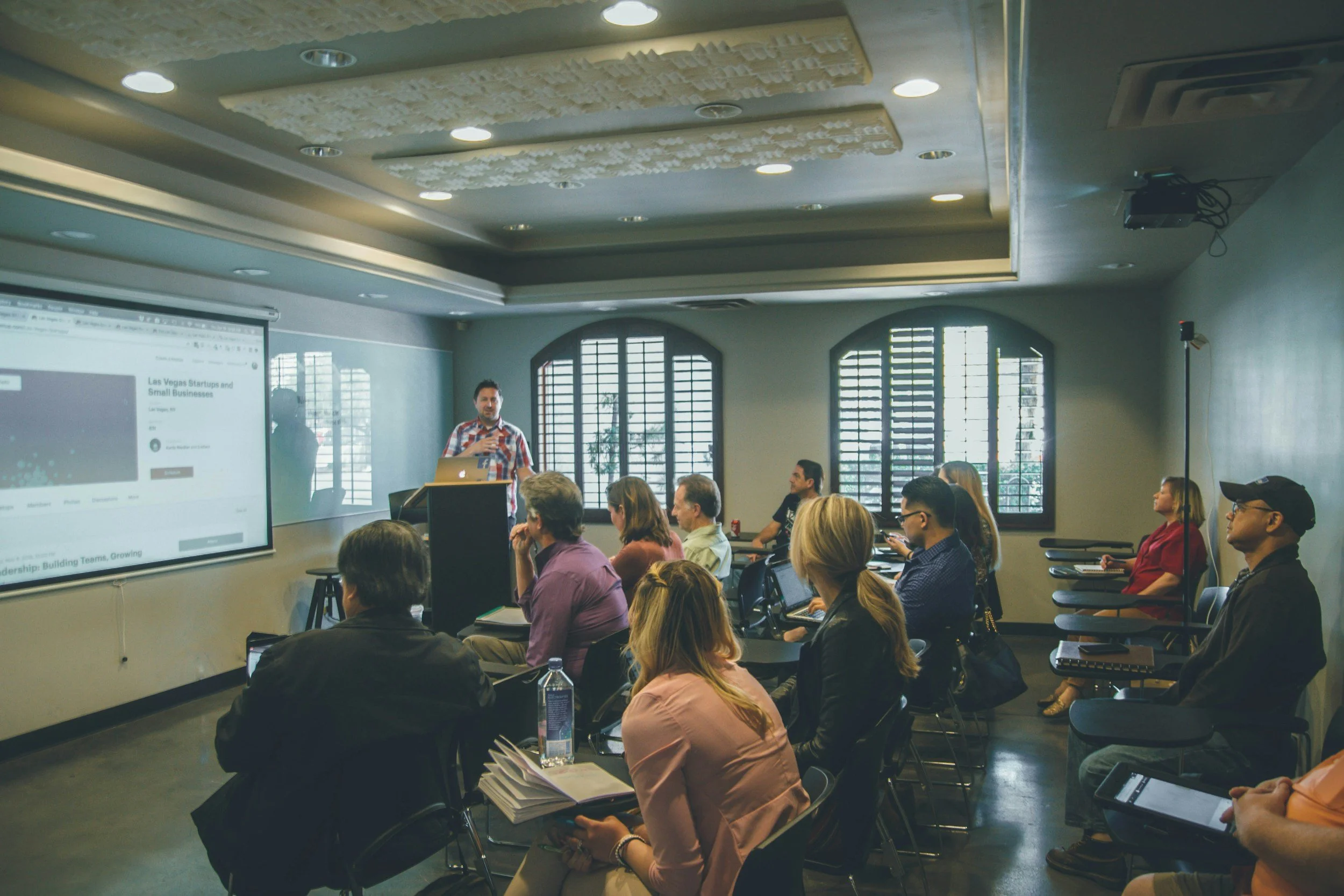
Trainings & Workshops
Interactive sessions designed to immediately change how your team understands and supports neurodivergence.
Topics include:
Supporting ADHD & executive functioning challenges
Understanding dysregulation and behavior
Neurodivergent-friendly communication
Reducing burnout through environment design
Understanding Your Students & Employees: Accommodations That Actually Work

Environment Audit & Recommendations
A deep dive into your current systems, spaces, and expectations.
You’ll receive:
A clear breakdown of what’s working (and what’s not)
Practical, actionable recommendations
Strategies tailored to your specific environment

Ongoing Consulting & Support
For teams ready to implement real change.
Includes:
Staff coaching
Case consultation
Ongoing problem-solving
Support with implementation and follow-through
My Approach
My work is grounded in a combination of clinical understanding, nervous system science, and real-world application inside actual schools and workplaces—not idealized environments.
I draw from:
Nervous system regulation
Understanding how stress, overload, sensory input, and emotional strain impact attention, behavior, communication, and follow-through. Many “performance issues” are actually regulation issues in disguise.Executive functioning science
Breaking down how people plan, initiate, organize, shift attention, and sustain effort—and why breakdowns in these areas are often environmental, not motivational.Real-world application (not just theory)
Practical strategies that work in busy classrooms, understaffed schools, and fast-moving workplaces. If it doesn’t translate into daily life, it’s not useful.Sustainability for both leaders and individuals
Solutions that support neurodivergent individuals and the systems around them, so change doesn’t rely on burnout, over-functioning, or constant crisis response.
This work is not about adding more tools, more steps, or more expectations.
It’s about identifying what is already creating friction—and adjusting the environment so people can actually access what they already know and are capable of doing.
I’m not here to give you more strategies to try and abandon when they don’t survive real life.
I’m here to help you build systems that hold up under real conditions—stress, variability, human needs, and all.

About Me
I’m Shannon Keleher, LCSW and ADHD-Certified Clinical Services Provider. I’m a former school social worker, and my work now sits at the intersection of clinical practice, neurodivergence, and real-world systems—helping both individuals and organizations better understand how attention, regulation, communication, and executive functioning actually work in practice.
I specialize in supporting neurodivergent individuals and the systems around them—particularly ADHD and autism—through practical, realistic strategies that fit into everyday environments like classrooms, workplaces, and leadership structures.
Much of my work focuses on what happens when there is a mismatch between a person’s cognitive or nervous system needs and the environment they’re expected to function in. In those gaps, you often see burnout, inconsistency, shutdown, overwhelm, or disengagement—even in highly capable individuals.
My role is to help close that gap.
I bridge clinical expertise with real-world application so that the changes you make are not only informed by research and experience—but actually usable in day-to-day life.
The goal is not just short-term improvement.
It’s systems, environments, and practices that are sustainable over time—for the people inside them and the leaders supporting them.
Let’s build environments that work better—for everyone.
Start the conversation and we’ll figure out what support makes the most sense for your school or organization.