

Neurodivergent-Friendly Consulting for Schools & Workplaces
Changing Course Consulting
A service of Changing Course Therapy
Neurodivergent-friendly consulting for schools and workplaces. Creating environments where neurodivergent people don’t just “cope”—they actually thrive.
At Changing Course Consulting, a service of Changing Course Therapy, I work with schools and organizations to move beyond one-size-fits-all systems and create environments that better support attention, regulation, flexibility, and sustainable performance.
Because when environments work with the brain—not against it—everything changes.
The Problem
Most schools and workplaces weren’t designed with neurodivergence in mind.
They were built around assumptions like:
People can focus on demand
Everyone processes information the same way
Motivation looks the same for everyone
Structure and routine work universally
“More effort” solves most performance issues
But for neurodivergent students and employees—especially those with ADHD, autism, or sensory processing differences—these environments often create constant friction.
That leads to:
Burnout (students, staff, and employees trying to function in systems that don’t fit how their brain works)
Behavioral challenges or disengagement (often misunderstood as defiance, lack of effort, or inconsistency)
Miscommunication and frustration (between staff, leadership, and neurodivergent individuals)
Underperformance from highly capable people who know what to do—but can’t consistently access the conditions to do it
And because the underlying issue isn’t always visible, the response often becomes:
➡️ “They just need to try harder”
➡️ “They need more discipline or accountability”
➡️ “They need to learn how to function in the system”
➡️ “We’ve already given accommodations”
But in many cases, the issue isn’t effort or willingness.
It’s that the system is asking people to function in ways their nervous system wasn’t designed to sustain.
The Shift
I help schools and organizations shift from trying to “fix the individual” to redesigning the environment they’re expected to function in.
This means creating systems that account for how attention, regulation, motivation, and communication actually work in real life—not just on paper.
Practically, this looks like helping teams:
Reduce unnecessary stress and dysregulation by identifying environmental and relational triggers that quietly overload attention and emotional regulation
Support attention, motivation, and follow-through by adjusting structure, clarity, and expectations so people can actually access their skills
Improve communication and flexibility so instructions, feedback, and expectations are clearer, more consistent, and easier to act on
Retain and empower neurodivergent individuals by reducing burnout, misunderstanding, and preventable performance breakdowns
This is not about lowering expectations.
It’s about removing the barriers that make those expectations harder to meet than they need to be.
When the environment is aligned with how people actually function, performance becomes more consistent, communication becomes clearer, and burnout becomes preventable instead of inevitable.
Who This Is For
Schools
This work is a fit for K–12 schools that are seeing gaps between student capacity and student performance.
This may include:
K–12 educators and administrators who are navigating increasing classroom dysregulation or emotional overwhelm
Special education teams who want strategies that translate beyond compliance and paperwork into real classroom function
Classrooms experiencing frequent transitions struggles, rigidity, shutdowns, or escalation cycles
Schools that are looking for practical, real-world strategies for neurodivergent students—not just theoretical training or checkbox compliance
This is especially helpful for teams who feel like they are constantly reacting, rather than proactively supporting regulation and learning.
Workplaces
This work is a fit for small to mid-size organizations where performance, communication, and retention are being impacted by burnout or misalignment between people and systems.
This may include:
Small to mid-size teams where roles are clear on paper but inconsistent in practice
Leadership teams looking to improve retention, engagement, and employee sustainability
Organizations noticing burnout, communication breakdowns, or uneven performance across otherwise strong employees
Teams ready to support different working styles without losing structure, accountability, or clarity
This is especially relevant for workplaces where employees are capable, motivated, and underperforming—not due to skill, but due to environmental mismatch.
What This Is Not
This work is often misunderstood—so clarity matters.
Changing Course Consulting is not:
A compliance-based training or checkbox solution
A program focused on “fixing” individuals or changing personality traits
A set of generic strategies that look good on paper but don’t translate to real environments
A call to lower expectations or reduce accountability
A one-size-fits-all model that assumes every school or workplace needs the same approach
A quick fix or surface-level workshop with no implementation support
Instead, this work is focused on helping teams understand what is actually driving breakdowns in attention, communication, regulation, and performance—and how to adjust environments so people can function more effectively within them.
This is applied, practical, and grounded in how people actually work, learn, and regulate in real life.
Services
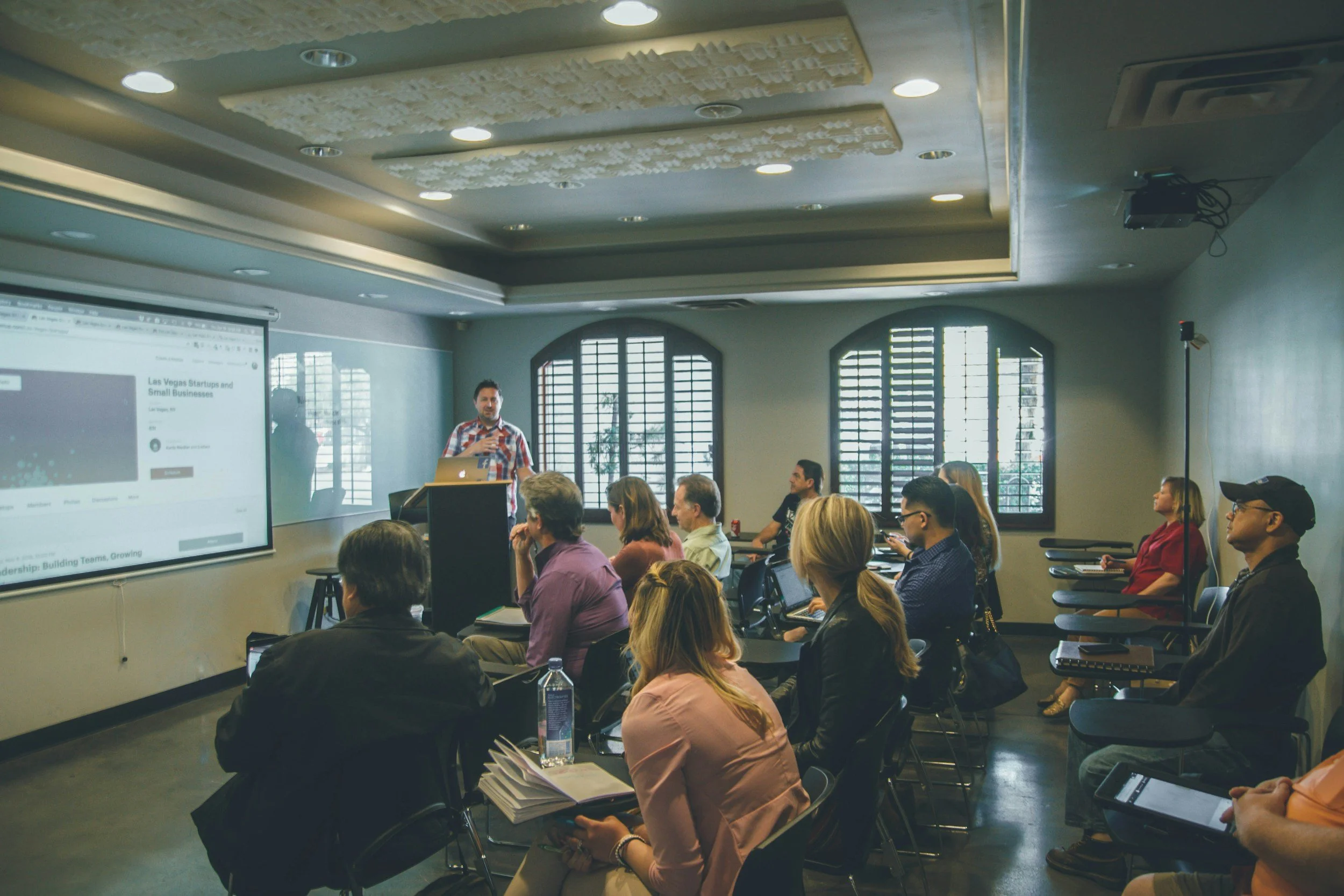
Trainings & Workshops
Interactive sessions designed to immediately change how your team understands and supports neurodivergence.
Topics include:
Supporting ADHD & executive functioning challenges
Understanding dysregulation and behavior
Neurodivergent-friendly communication
Reducing burnout through environment design
Understanding Your Students & Employees: Accommodations That Actually Work

Environment Audit & Recommendations
A deep dive into your current systems, spaces, and expectations.
You’ll receive:
A clear breakdown of what’s working (and what’s not)
Practical, actionable recommendations
Strategies tailored to your specific environment

Ongoing Consulting & Support
For teams ready to implement real change.
Includes:
Staff coaching
Case consultation
Ongoing problem-solving
Support with implementation and follow-through
My Approach
My work is grounded in a combination of clinical understanding, nervous system science, and real-world application inside actual schools and workplaces—not idealized environments.
I draw from:
Nervous system regulation
Understanding how stress, overload, sensory input, and emotional strain impact attention, behavior, communication, and follow-through. Many “performance issues” are actually regulation issues in disguise.Executive functioning science
Breaking down how people plan, initiate, organize, shift attention, and sustain effort—and why breakdowns in these areas are often environmental, not motivational.Real-world application (not just theory)
Practical strategies that work in busy classrooms, understaffed schools, and fast-moving workplaces. If it doesn’t translate into daily life, it’s not useful.Sustainability for both leaders and individuals
Solutions that support neurodivergent individuals and the systems around them, so change doesn’t rely on burnout, over-functioning, or constant crisis response.
This work is not about adding more tools, more steps, or more expectations.
It’s about identifying what is already creating friction—and adjusting the environment so people can actually access what they already know and are capable of doing.
I’m not here to give you more strategies to try and abandon when they don’t survive real life.
I’m here to help you build systems that hold up under real conditions—stress, variability, human needs, and all.

About Me
I’m Shannon Keleher, LCSW and ADHD-Certified Clinical Services Provider. I’m a former school social worker, and my work now sits at the intersection of clinical practice, neurodivergence, and real-world systems—helping both individuals and organizations better understand how attention, regulation, communication, and executive functioning actually work in practice.
I specialize in supporting neurodivergent individuals and the systems around them—particularly ADHD and autism—through practical, realistic strategies that fit into everyday environments like classrooms, workplaces, and leadership structures.
Much of my work focuses on what happens when there is a mismatch between a person’s cognitive or nervous system needs and the environment they’re expected to function in. In those gaps, you often see burnout, inconsistency, shutdown, overwhelm, or disengagement—even in highly capable individuals.
My role is to help close that gap.
I bridge clinical expertise with real-world application so that the changes you make are not only informed by research and experience—but actually usable in day-to-day life.
The goal is not just short-term improvement.
It’s systems, environments, and practices that are sustainable over time—for the people inside them and the leaders supporting them.
Let’s build environments that work better—for everyone.
Start the conversation and we’ll figure out what support makes the most sense for your school or organization.