

ADHD in Women and Hyperfixation Eating: Why You Eat the Same Food Until You Suddenly Can't
If you're a high functioning ADHD woman who has eaten the same lunch every day for three weeks straight, then woke up one morning unable to even look at it, this one is for you.
Hyperfixation eating isn't picky eating, and it's not a willpower problem. Your brain is responding to food in a measurably different way, and once you understand what's actually happening, the pattern stops feeling so random.
This is something I hear about constantly from women in this community. You find the perfect meal. You buy it in bulk. You tell everyone about it. Then one day it's just... dead to you, and you're standing in front of the fridge with nothing that sounds good and no energy to figure out what to eat instead.
It's a pattern so many women with ADHD describe, especially if you're late diagnosed ADHD and just starting to connect the dots between your brain and your eating habits. High functioning ADHD often means you've spent years quietly working around this without realizing it had anything to do with ADHD at all. Once you see the research behind it, food stops feeling like one more thing you're doing wrong.

Some resources mentioned may include affiliate links, including Amazon. As an Amazon Associate, I earn from qualifying purchases, and I may also earn a small commission through other affiliate partners, at no additional cost to you. I only recommend products and books that align with evidence-informed ADHD support and relational health practices. Thanks for supporting my small business!
Table of Contents
Why ADHD in Women Makes Food Such a Powerful Dopamine Source
Researchers have looked at what's happening in ADHD brains, and it starts with how they process reward. A brain imaging study published in JAMA used PET scans, a type of imaging that shows chemical activity in the brain, to compare 53 adults with ADHD who had never taken medication to 44 adults without ADHD. The researchers found that the ADHD group had fewer dopamine receptors and dopamine transporters in the brain's reward pathway. Dopamine is the chemical messenger behind motivation and the "that felt good, let's do it again" feeling. Lower availability in that pathway was also linked to more trouble with attention.
In plain terms, the ADHD brain is often running a little under-rewarded. It isn't getting the same payoff from everyday activities that a neurotypical brain gets, so it goes looking for more. That's why ADHD brains are so often described as dopamine seeking.
Research on personality and temperament points the same way. A study published in the American Journal of Psychiatry found that adults with ADHD scored higher on novelty seeking, a trait that describes how strongly someone is drawn to new and stimulating experiences. So the ADHD brain is wired to chase two things at once: reward and newness.
Food delivers both. It's one of the fastest, most reliable, and most available sources of reward in your whole day. You don't have to plan it, sign up for it, or wait for it. When your brain finds a food with exactly the right taste, texture, and predictability, it locks in. That food becomes a guaranteed good moment in a day that might otherwise feel chaotic and overstimulating, and your brain wants it again tomorrow. And the day after that.
Why Your Hyperfixation Food Suddenly Stops Working
This is the part that feels so confusing from the inside. How can a food go from favorite-thing-ever to absolutely-not seemingly overnight?
Food scientists have a name for part of this: sensory-specific satiety. It means that as you eat a particular food, the pleasure you get from that specific food drops faster than your pleasure in other foods. Research by Barbara Rolls and colleagues found that after people ate a food, their pleasantness ratings for that exact food fell more than their ratings for foods they hadn't eaten. It's the reason you can be "too full" for more dinner but somehow still want dessert.
That effect doesn't only happen within a single meal. In a study published in the British Food Journal, participants ate the same snack every day for 15 days, and their enjoyment of the taste of chocolate steadily dropped over that time. Eating the same thing day after day wears down how rewarding it feels, even when it's a food people love.
There's a related process called habituation, which means your brain's response to something shrinks the more often it's repeated. A review published in Psychological Review laid out how habituation shapes eating: the more you're exposed to the same food, the less motivated you are to keep eating it, and introducing something different can bring that motivation back.
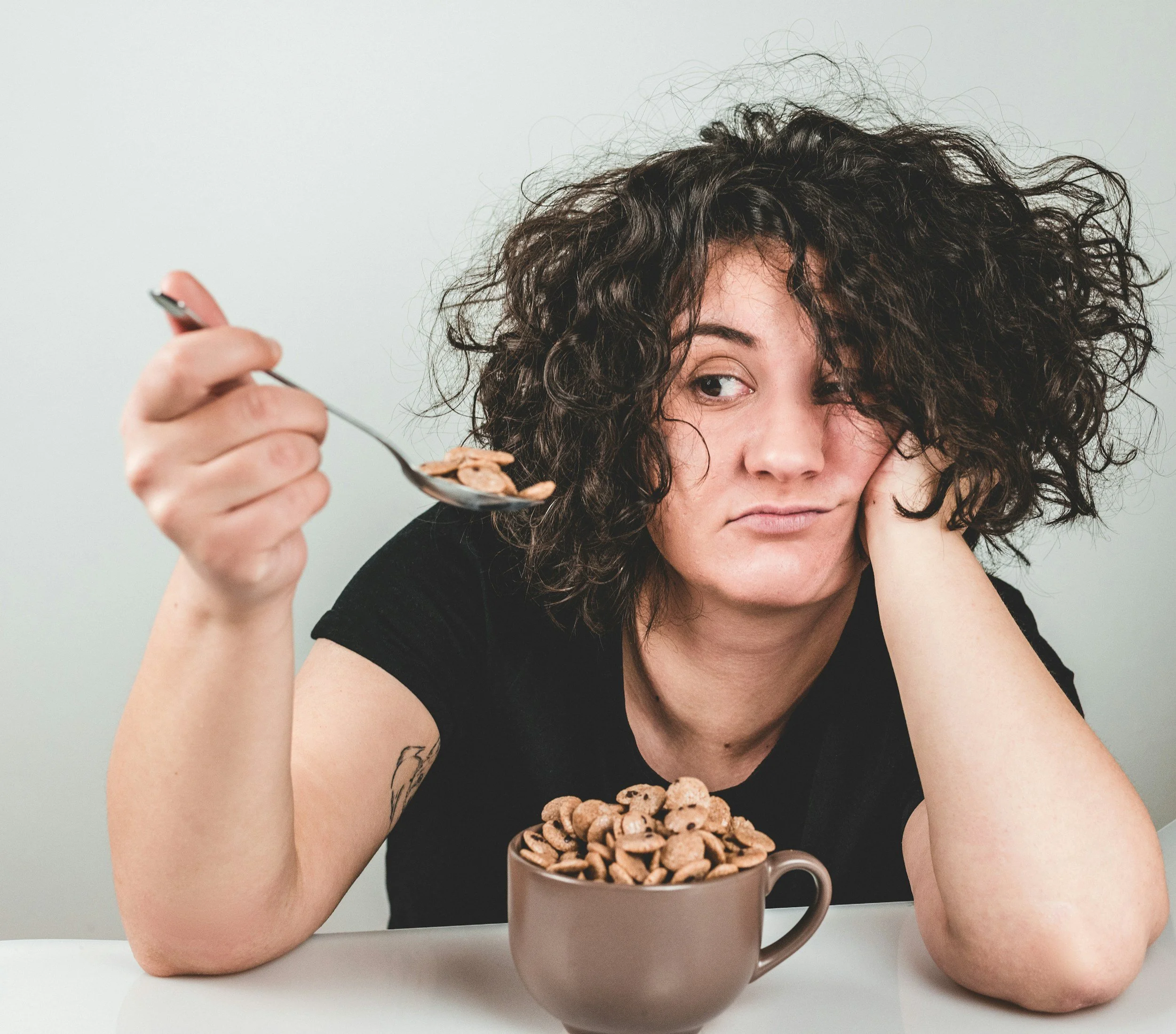
Now layer that onto an ADHD brain that's already chasing novelty. The first few times you eat your new favorite food, you get a double hit: it tastes great and it's new. Each repeat takes a little of the newness away. For a while, the taste carries it. Then one day the reward stops landing, and because ADHD brains tend to experience things in all-or-nothing terms, it doesn't fade gently. It falls off a cliff. This cycle is often called a food jag, a stretch of eating the same one or two foods over and over, followed by a sudden aversion to them.
And for a lot of ADHD women, that crash carries shame with it. "I just bought twelve of these. What is wrong with me?" That spilled-glass-of-milk feeling, where a small thing lands like proof that you're failing at being an adult, is tied to emotional dysregulation, which is a core part of ADHD that rarely gets talked about. You're not overreacting. Your brain processes frustration faster and more intensely.
Executive Dysfunction and the "What Do I Even Eat?" Problem
Hyperfixation foods don't only feel good because of dopamine. They also solve a problem you might not realize you have.
Executive function is your brain's management system. It handles planning, prioritizing, starting tasks, and making decisions, and ADHD affects it directly. Think about everything that goes into "just make lunch": noticing you're hungry, remembering what you have, deciding what sounds good, figuring out how to make it, actually starting, and cleaning up after. A hyperfixation food skips almost all of those steps because the decision is already made. It's autopilot.
Even that first step, noticing you're hungry, can be harder with ADHD. A 2018 study published in Frontiers in Psychiatry found that lower self-reported awareness of hunger and fullness signals partly explained the link between inattentive ADHD symptoms and binge eating. In practical terms, a lot of ADHD women don't notice hunger until they're starving, and by then nothing sounds good and there's no bandwidth left to figure it out.
If you're the reliable one, the woman holding everything together at work and at home, this gets even heavier. You're making hundreds of decisions a day for other people. By the time you get to your own meal, you're tapped out. Hyperfixation eating often gets stronger during seasons of overfunctioning and ADHD burnout, because your brain is trying to save every bit of energy it can. So when your fixation food dies, you don't just lose a favorite meal. You lose your autopilot, right when you have the least executive function to replace it.
That's why the strategies below aren't about eating "better." They're about lowering the effort it takes to eat at all.
Variety Stacking: Stretch the Dopamine Instead of Replacing It
Before any strategies, I want to say this clearly: none of this is meant to be restrictive. This isn't about avoiding your safe foods or forcing yourself to eat things your brain doesn't want. Safe foods are good. Eat them. The goal is to keep the novelty alive a little longer so the burnout doesn't hit as fast.
Variety stacking means you keep eating your hyperfixation food and add something small alongside it. The habituation research is exactly why this works: a little bit of something different can bring back some of the reward that repetition wore away. You're not replacing the dopamine hit. You're extending it.
That can look like a new sauce on the same chicken, a different side with the same sandwich, the same flavors in a new format (burrito bowl ingredients as a quesadilla), a new seasoning, or a texture change like toasting, freezing, or blending. Think of it as a remix instead of a new song. Your brain still recognizes it, but it gets something new to pay attention to.
A seasoning sampler is one of the lowest-effort ways to do this, because it turns the same food into a new experience with one shake.
→ Shop Seasoning Sampler SetIf sauce is your thing, a variety pack makes swapping sauces grab-and-go instead of a whole project.
→ Shop Sauce Variety PackFor the "same food, new format" trick, a panini press can turn leftovers into something crispy and new with almost no effort.
→ Shop Panini Press
Ready Options for When the Fixation Runs Out
A lot of food jags turn into skipped meals because, when the current fixation ends, there's nowhere for your brain to go. Deciding what to eat in that moment takes executive function you don't have. The fix is to build the next option before you need it.
Keep two or three zero-decision backup meals stocked at all times, like a frozen meal you like, a boxed pasta, or a snack plate you can throw together. Then make them visible. ADHD brains tend to run on "out of sight, out of mind," so food hidden in the back of the fridge basically doesn't exist. Clear containers and bins at eye level help your brain see its options without having to remember them.
It also helps to prep in pieces instead of full meals. Cooking five identical lunches is basically scheduling a food jag. Prepping components instead, like a protein, a grain, some chopped veggies, and a couple of sauces, lets you mix and match through the week, which builds variety stacking right into your meal prep.
Clear glass containers make it easy to see what you have, and divided bento-style containers are made for component prep.
→ Shop Glass Meal Prep Containers
→ Shop Bento-Style Divided Containers
→ Shop Clear Fridge Organizer Bins
When you do need to cook, low-effort appliances do a lot of the executive function work for you. An air fryer makes fast meals (with the crunch so many ADHD brains crave), and a rice cooker does its job without you watching it.
→ Shop Air Fryer
→ Shop Rice Cooker
Catch the Pattern Early and Rotate Your Favorites
Once you know what a food jag looks like, you can start catching it before the crash. Early signs include eating it a little less enthusiastically than last week, adding more sauce or extras to make it "work," or thinking "eh, I guess" instead of "yes, finally." When you notice those, that's your cue to start variety stacking and make sure your backup options are stocked. You're not trying to stop the cycle. You're just softening the landing.
Here's the good news hiding in the sensory-specific satiety research: the drop in pleasure is tied to recent exposure, and it recovers with time away from that food. So a food that burned out usually isn't gone forever. It's resting. Keep a running "retired favorites" list, and bring those foods back after a break. To your brain, it's basically new again.
A magnetic whiteboard on the fridge is a simple, visible place for your safe foods, your backup meals, and your retired favorites, so you don't have to remember any of it when your brain goes blank.
→ Shop Magnetic Fridge Whiteboard
If you'd rather keep it free, a note on your phone works too. Every time a food works for you, add it. That list becomes your menu on the days nothing sounds good.
When Hyperfixation Eating Is More Than a Pattern
This part matters. Hyperfixation eating on its own is a common, very human ADHD experience. But ADHD and disordered eating overlap more than most people realize. A 2016 meta-analysis, which combines results from many studies to find the overall pattern, reviewed 17 studies and found that people with ADHD had about 3.8 times the risk of an eating disorder compared to people without ADHD. For binge eating disorder specifically, the risk was about 5.8 times higher. The same traits that drive hyperfixation eating, like dopamine seeking, impulsivity, trouble noticing hunger and fullness, and emotional dysregulation, can also make food feel much more complicated.
If you feel a loss of control around food, intense guilt or shame after eating, a list of foods you can eat that keeps shrinking, or like food takes up a lot of your mental space, please don't brush that off. You deserve support that accounts for both your ADHD and your relationship with food. The National Alliance for Eating Disorders runs a free helpline at (866) 662-1235, staffed by licensed therapists who specialize in eating disorders. It's open weekdays from 9am to 7pm Eastern.
Working With Your ADHD Brain at Mealtime, Not Against It
You don't need to overhaul how you eat to start. Pick one or two pieces from this post, maybe one small variety stack this week and one zero-decision backup meal in the freezer, and add the rest slowly over time. Your brain isn't picky or broken. It's wired to chase reward and novelty, and now you know what that wiring actually needs from you.
That's the part that tends to get lost when you're deep in an ADHD burnout spiral: you don't need a perfect meal plan, and trying to build one would probably backfire. ADHD brains do better with small, repeatable wins than with a total reset that falls apart by day three. Let one change become automatic, then layer in the next. Give yourself permission to do this imperfectly. Ordering takeout on a night your executive function is gone doesn't mean you're back at square one.
If you notice your hyperfixation eating gets louder in your most overwhelmed, overfunctioning seasons, that's often a sign your whole system needs a reset, not just your lunch. If you want a more structured, step-by-step way to work through that, I put together a workbook for exactly this. The ADHD Reset Sequence is a 5-step tool I created myself. It's built from what actually works for ADHD brains instead of generic productivity advice, and it walks you through building routines at a pace that won't leave you feeling like you failed by day two.
You're not broken. Your brain is just very specific about its dopamine.
Sources:
Temperament profiles in ADHD, American Journal of Psychiatry
Epstein et al., Habituation as a determinant of human food intake
*The information in this article is for educational purposes only and should not replace medical advice. If you think you may have ADHD, talk with a qualified healthcare professional about a comprehensive evaluation.*

Shannon Keleher is a Licensed Clinical Social Worker (LCSW), Certified ADHD Clinical Services Provider (ADHD-CCSP), and Certified Mental Health & Nutrition Clinical Specialist (CMNCS) specializing in helping women with ADHD navigate anxiety, executive functioning challenges, and the overwhelm of high-functioning ADHD. Through evidence-based education and compassionate support, she empowers women to better understand their brains and build lives that work with them—not against them. For more research-backed insights on ADHD in women, anxiety, and executive functioning, follow her on Instagram at @unmaskedadhdtherapist or subscribe to her newsletter.